Understanding children’s learning styles
Every child learns differently. While some children thrive when listening to explanations, others need to see, touch, or actively engage with material to truly understand it. Recognising and adapting to these differences can make a significant impact on a child’s confidence, enjoyment, and academic success.
In this post, we’ll explore the four main learning styles, how adaptive teaching methods can enhance learning, and how MagiKats incorporates these approaches into its workshops.
What are the four main learning styles?
Although every child is unique, learning preferences are often grouped into four broad categories:
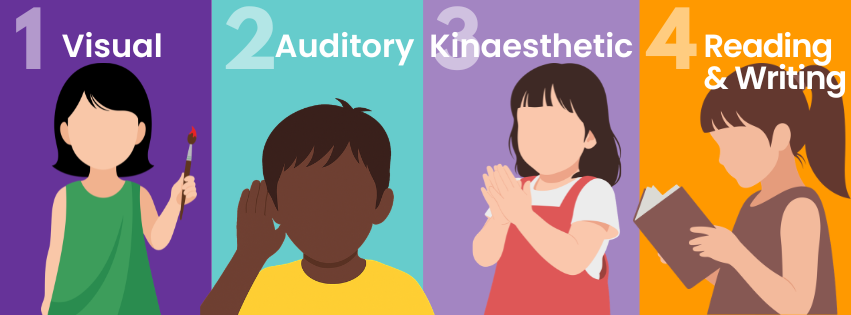
1. Visual learners
Visual learners understand information best through seeing. They think in pictures and may visualise the information they want to learn. This might include diagrams, charts, videos, or written instructions. They often benefit from colour-coding, mind maps, and illustrations that help them “see” the concept.
Signs your child may be a visual learner:
Enjoys drawing or looking at pictures
Remembers information better when it’s written down
Likes watching demonstrations
2. Auditory learners
Auditory learners absorb information most effectively through listening and hearing information to learn. They benefit from discussions, verbal explanations, and hearing concepts explained aloud.
Signs your child may be an auditory learner:
Enjoys storytelling or being read to
Learns well through class discussions
Often repeats information out loud
3. Kinaesthetic (tactile) learners
Kinaesthetic (or tactile) learners learn best through hands-on experiences. They need to move, touch, and actively engage with the material.
Signs your child may be a kinaesthetic learner:
Prefers activities over sitting still
Learns through trial and error
Enjoys building, experimenting, or role-playing
4. Reading/writing learners
These learners prefer interacting with text. They learn best through reading, note-taking, and writing explanations in their own words.
Signs your child may be a reading/writing learner:
Enjoys books and written instructions
Organises information into lists or uses highlighters for key points
Learns by rewriting or summarising information
How can adaptive teaching methods help children learn more effectively?
Adaptive teaching is about recognising that no single approach works for every child and how adjusting teaching methods to suit individual needs can ensure that all learners benefit and develop a range of skills. One major benefit is that children learn at an appropriate pace. Some grasp concepts quickly, while others need more time or different explanations. Adaptive teaching allows faster learners to move ahead, while giving others the support they need without pressure. This method also improves engagement and information retention while supporting emotional and motivational growth. All of this combined leads to a deeper understanding, stronger skills, and better long-term outcomes.
How does MagiKats incorporate learning styles into its workshops?
Our tutoring workshops are designed with flexibility and inclusivity at their core, ensuring that every child can thrive regardless of their preferred learning style.
We provide:
A supportive environment that promotes mixed learning styles, recognising that most children don’t fit exactly into one category.
The use of a range of teaching techniques built into every session, to match how children naturally learn. This includes visual aids and structured worksheets, verbal explanations and guided discussions, interactive problem-solving activities, and written practice to reinforce learning
A focus on the engagement of our students so that they’re more likely to stay motivated, improve concentration and understanding of what’s being taught.
Positive encouragement to improve confidence so as students grasp concepts, they are encouraged to take on new challenges.
Small group learning
As our workshops are broken into small groups of no more than six students to a mentor, we can better observe how each child learns and adapt our teaching accordingly. This allows for more personalised support and targeted guidance.
Tailored feedback
Children receive individual feedback that reflects their learning style. For example, a visual learner might benefit from diagram-based explanations, while a tactile learner may be guided through a hands-on approach.
Encouraging independent thinking
We encourage children to explore different ways of solving problems. This helps them discover which methods work best for them while also strengthening less dominant learning styles.
Building confidence through success
By presenting material in ways children understand, workshops help reduce anxiety around subjects like maths and English. As children experience success, their confidence grows, creating a positive cycle of learning that can help them thrive across all subjects at school.
How does a child’s learning style change as they get older?
Children’s learning styles don’t stay fixed, they evolve as the brain develops, experiences widen and confidence grows. With this in mind, it’s really important to support children at the right level and introduce new ways of learning gradually, encouraging flexibility rather than limiting a child to just one learning style. In the long run, helping children explore and combine different learning styles builds resilience, independence, and confidence in their ability to learn anything.
Enrolling students throughout the school year
At every age and stage of development, MagiKats uses a range of teaching styles and stimuli to support learning. A multi-sensory approach benefits all learners, while also helping children recognise and appreciate each other’s strengths. In a group setting like MagiKats, every child is different and that diversity is part of what makes the experience so enjoyable. It’s this long-term, consistent and low-stress support that can make a real difference to your child’s education. Interested in learning more? Find your local Tuition Centre or online Tutor.